

The Big Software Trap: Why Your Tech Stack Is Creating More Work
You probably didn't build your business systems badly. You probably did exactly what you were told to do. You chose the “best” email platform.
The well-known booking software.
The popular course platform.
The big-name CRM.
A separate payment system.
Another tool for forms.
Something else for funnels.
Then maybe Zapier or another integration tool to desperately make all of them talk to each other.
Individually, every decision made sense.
Collectively?
You accidentally built yourself a part-time admin job.
And this is the part the software industry doesn't talk about enough.
The problem isn't always that you need better software.
Sometimes the problem is that you have too much software.
The big-name trap
There is a belief in business that choosing the biggest company for each job is the safest option.
Surely the specialist email company must be best for email.
The specialist booking tool must be best for appointments.
The specialist course platform must be best for courses.
The huge CRM must be the “serious business” choice.
So you keep adding.
One platform becomes three.
Three becomes six.
Six becomes nine.
And suddenly your “professional tech stack” looks like this:
Lead comes in → CRM → email platform → booking tool → payment system → onboarding form → course platform → calendar → follow-up system.
Except those systems do not naturally know what is happening inside the others.
So guess who becomes the integration?
You.
You copy information.
You check whether something synced.
You move people between lists.
You update tags.
You resend emails.
You check payments.
You wonder why somebody received the wrong automation.
You log into six dashboards to answer one simple question.
And when an integration breaks, you get the particularly enjoyable experience of three software companies telling you the problem belongs to somebody else.
Very efficient.
Your business doesn't experience software in separate categories
This is where I think the traditional software model gets business completely wrong.
Your client does not experience:
CRM.
Email marketing.
Calendar.
Payments.
Course platform.
Automations.
She experiences one relationship with your business.
She discovers you.
She asks a question.
She books.
She pays.
She receives information.
She becomes a client.
She gets reminders.
She accesses what she bought.
She receives follow-up.
She buys again.
That is one journey.
Yet many businesses are trying to run that one journey across five, seven or ten separate systems.
Then we wonder why things get missed.
The hidden cost isn't the subscriptions
Everyone calculates software costs by looking at the monthly fees.
€39 here.
€79 there.
€29 somewhere else.
Another €99 for the tool that connects the other tools.
But that is not the expensive part.
The expensive part is the human workload created between them.
The five minutes checking whether something synced.
The fifteen minutes manually adding a client somewhere else.
The forgotten follow-up.
The lead who never received the next email.
The course customer who needs help finding their login.
The duplicate contact.
The booking you didn't notice.
The automation nobody trusts, so you check it manually anyway.
One tiny task means nothing.
Fifty tiny tasks every week become your life.
That is your invisible workload.
“But I use the best tools”
Maybe you do.
That still doesn't mean you have the best system.
This is the distinction I want more business owners to understand.
A collection of excellent tools does not automatically create an excellent business infrastructure.
In fact, sometimes it creates the opposite.
Because each company is building its product around its product.
The email platform wants you inside the email platform.
The CRM wants you inside the CRM.
The course software wants you inside the course software.
The calendar wants you inside the calendar.
Nobody is responsible for the entire client journey.
Except you.
And that is how supposedly sophisticated technology creates more work instead of removing it.
Your tech should know what just happened
This is the standard I think business owners should start expecting.
A client books an appointment.
The system should know.
A lead downloads something.
The system should know.
Someone buys your course.
The system should know.
A client misses an appointment.
The system should know.
Someone completes a form.
The system should know.
A prospect has not replied for seven days.
The system should know.
You should not be carrying that information around in your head.
And you should definitely not be moving it manually from one platform to another.
Your business should remember for you.
Automating a messy business isn't the answer either
There is another mistake I see constantly.
People realise they are overwhelmed, so they start automating everything.
Bad idea.
Because automating unnecessary complexity just gives you automated complexity.
Before asking:
“How can I automate this?”
Ask:
“Why am I doing this at all?”
Then:
“Does this actually require me?”
There are things in your business that absolutely should involve you.
Your expertise.
Your ideas.
Your judgment.
Your relationships.
Your creativity.
Your point of view.
The work that makes someone choose you.
That is your Genius Zone.
Everything else should face a much harder test.
Can it be removed?
Simplified?
Systemised?
Automated?
Because the goal is not to build the most impressive tech stack.
The goal is to build a business where technology quietly removes the work that does not require your genius.
The future isn't MORE software
I actually think we are moving into the opposite era.
For years, business owners were encouraged to assemble giant tech stacks.
There was a tool for everything.
Now we have something far more valuable:
The ability to consolidate.
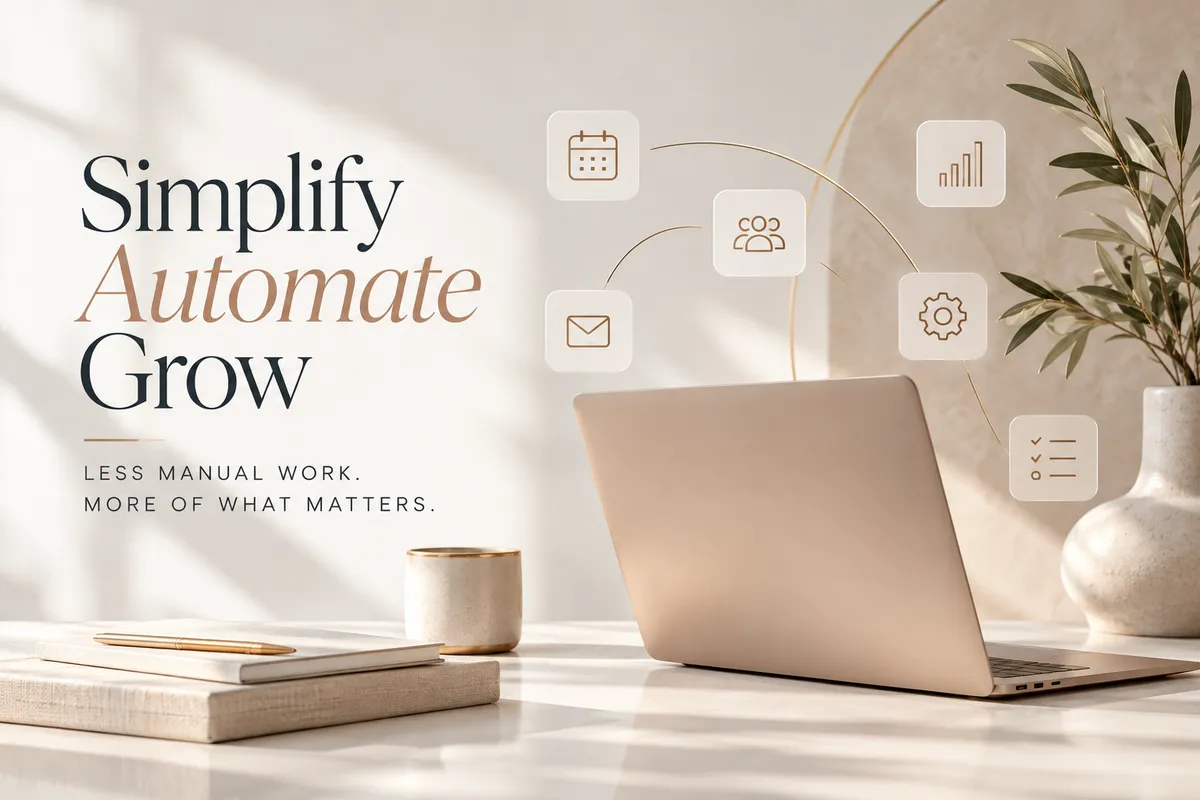
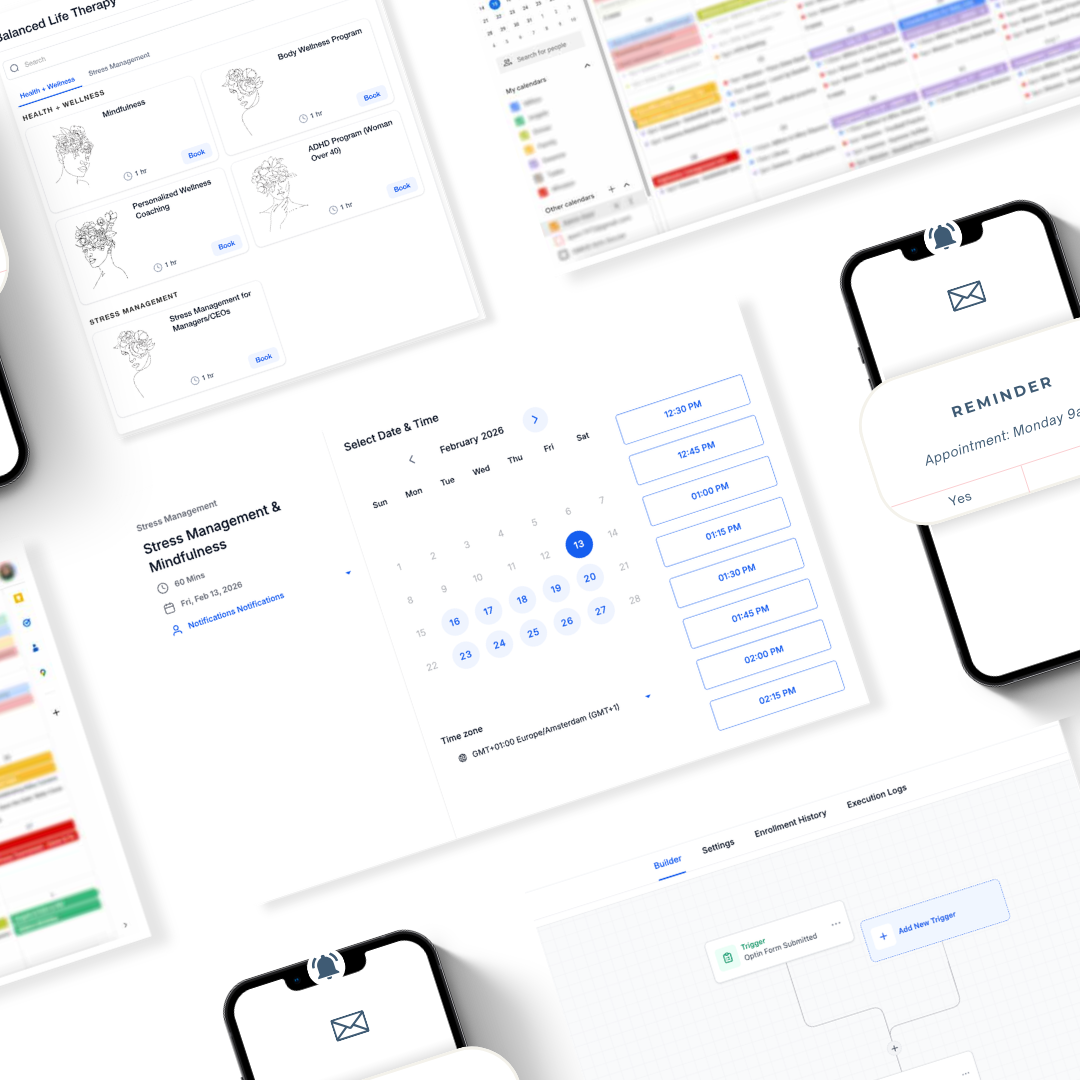
Your CRM can know who booked.
Your calendar can trigger the reminder.
Your payment can trigger onboarding.
Your form can update the contact.
Your course can sit inside the same client environment.
Your lead can move automatically based on what she actually does.
Your follow-up can happen without someone remembering to send it.
And suddenly technology starts doing what technology was supposed to do in the first place.
Reduce work.
My rule is becoming very simple
If technology requires you to constantly manage the technology, something has gone wrong.
I don't want women spending their best thinking time connecting software.
Or moving contacts.
Or checking tags.
Or manually sending things their business already knows need to be sent.
I want you doing the work only you can do.
Building authority.
Creating ideas.
Helping clients.
Making decisions.
Developing your expertise.
Becoming unforgettable.
And letting the boring stuff happen quietly in the background.
That is the philosophy behind PowerZone:
Authority First. Visibility Second. Automation Always.
Not automation because technology is exciting.
Automation because your time is more valuable than the repetitive work your business keeps handing back to you.
Before you add another “best-in-class” platform to your business, ask a better question:
Does this remove work from my life...
or is it about to create more?
Because your software stack should not become another employee you have to manage.
It should be the reason you need to manage less.
Want to see how much invisible work your business is creating?
Take the Invisible Workload Assessment and identify the repetitive work, unnecessary admin and manual processes quietly consuming your time.